Audacity at Zero Dollars: The Scrappy Audio Editor That Made the Pros Stop Laughing
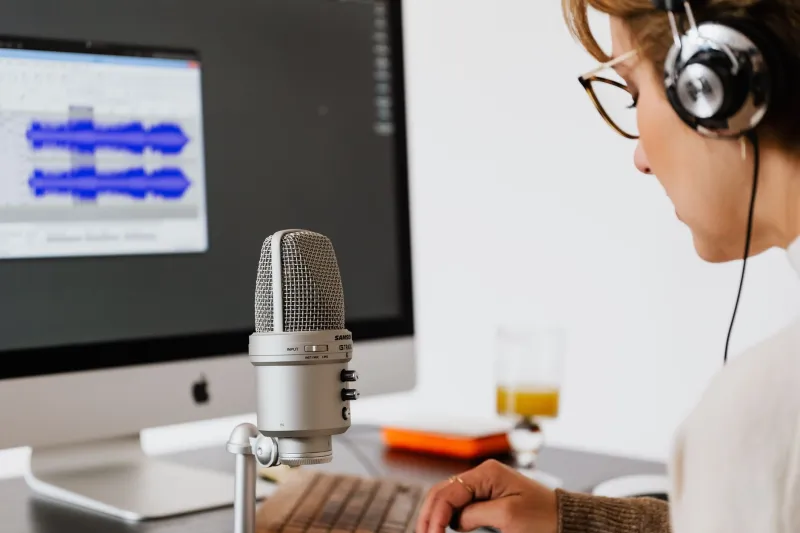
There's a certain kind of software snobbery that exists in creative fields. Musicians have it. Podcast producers have it. Audio engineers definitely have it. The assumption goes something like this: if you're serious about your craft, you pay for serious tools. Adobe Audition. Logic Pro. Pro Tools. These are the names that get dropped in professional circles, the ones that come bundled with implicit credibility.
And then there's Audacity — a free, open-source audio editor that first shipped in 2000, looks like it was designed during the Bush administration, and somehow refuses to stop being relevant.
What happened here? How does a no-budget, volunteer-driven project end up on the same shortlist as software backed by billion-dollar companies? The answer turns out to be more interesting than "it's free, so people use it."
The Origin Story Nobody Really Talks About
Audacity started as a university project at Carnegie Mellon. Dominic Mazzoni and Roger Dannenberg weren't trying to disrupt the audio software market — they were solving a problem they had. The tool they built was functional, flexible, and crucially, free to distribute. It hit SourceForge in 2000, and that was basically it. No launch event. No press release. No marketing budget.
What it had instead was timing. The early 2000s podcast explosion — and later, the YouTube creator economy — created an enormous population of people who needed to edit audio but had absolutely no budget to do it. Audacity was there. It worked on Windows, Mac, and Linux. It was good enough to get the job done. And "good enough" in software has a way of becoming "the standard" faster than anyone expects.
By the time paid competitors started noticing, Audacity had already accumulated years of user familiarity, a deep library of community tutorials, and a plugin ecosystem that kept expanding without anyone at a corporate headquarters authorizing it.
Why It Actually Works for Professionals
Here's where the narrative gets complicated, because Audacity isn't just a beginner's tool that people tolerate. Working audio professionals genuinely reach for it — not always as their primary DAW, but as a reliable utility in their chain.
The reasons are practical. Audacity handles multi-track recording, noise reduction, pitch correction, and spectral editing without requiring a subscription or a dongle. Its support for VST plugins means you can extend it with professional-grade effects. The batch processing functionality alone makes it indispensable for anyone who regularly cleans up large volumes of audio files.
Podcasters especially have made Audacity a near-universal first tool. When you're producing a weekly show out of your home office and your margins are tight, spending $20-30 a month on Adobe Audition is a real conversation you have with yourself. Audacity eliminates that conversation entirely.
Music producers in the bedroom-studio space tell a similar story. Many of them use Audacity alongside free DAWs like LMMS or Reaper's discounted license, building out surprisingly capable production setups without touching a major software subscription.
The Spyware Scare and the Governance Mess
No honest account of Audacity's evolution skips over 2021, because that year nearly torched the whole thing.
Muse Group acquired Audacity, and shortly after, a proposed privacy policy update surfaced that suggested the software would collect user data including IP addresses and send it to third parties. The open-source community did not take this quietly. GitHub threads exploded. Reddit threads went viral. The word "spyware" started getting attached to Audacity's name in tech headlines, which is about the worst thing that can happen to a tool people trust with their creative work.
Muse Group walked back significant portions of the proposal, but the damage to community trust was real and lasting. Several forks appeared almost immediately — Tenacity being the most prominent — as developers exercised the exact right that open-source licensing exists to protect.
What's notable, though, is that Audacity survived. Not just technically, but reputationally. The user base didn't evaporate. Downloads didn't crater. The core functionality that made it useful hadn't changed, and for many users, that was ultimately what mattered. The episode became a case study in how open-source governance crises play out — messy, public, and frequently resolved by the community simply forking and moving on.
What This Means for the Broader Software Market
The business implications of Audacity's success are worth sitting with for a moment.
Adobe Audition costs around $55 a month as a standalone subscription. Logic Pro is a one-time $200 purchase, Mac only. Pro Tools runs anywhere from $99 a year for the entry tier to significantly more for full studio licensing. These are real expenditures that small creators, independent journalists, nonprofit organizations, and cash-strapped school districts have to weigh.
Audacity's existence at zero cost doesn't just give those users an alternative — it permanently anchors the price conversation. Any paid competitor selling audio editing software now has to justify its price against a free option that handles the majority of common use cases competently. That's a different sales environment than the one that existed before Audacity became ubiquitous.
This is the broader pattern that freeware advocates have been pointing to for years. When a free tool achieves genuine competence in a category, it doesn't just serve users who can't afford paid options — it reshapes the entire market's pricing logic.
The Community Is the Product
One thing that gets undersold in discussions about Audacity is how much of its value comes from the ecosystem around it rather than the software itself.
There are thousands of tutorials on YouTube, ranging from basic noise removal for beginners to advanced spectral repair workflows. There are active subreddits, Discord servers, and forum communities where users troubleshoot issues and share techniques. This accumulated knowledge infrastructure took two decades to build, and it's not something a paid competitor can simply purchase or replicate quickly.
When someone new to audio editing searches for help, they find Audacity answers everywhere. That discoverability compounds over time. New users get onboarded into the Audacity ecosystem not because of any marketing campaign, but because the community created the resources that make learning it accessible.
So Where Does It Fall Short?
Fairness demands acknowledging the gaps. Audacity's interface is genuinely dated — not charmingly retro, just old. Real-time effects processing is limited compared to modern DAWs. It's not designed for MIDI composition. If you're scoring film, producing electronic music with complex layering, or running a professional recording studio, Audacity is probably not your primary tool.
But that's fine. No single piece of software has to do everything. Audacity carved out a specific, enormous niche — accessible, capable audio editing for people who need to get work done without a software budget — and it owns that niche completely.
The Takeaway
Audacity's story is the kind of thing Freeware Arena exists to document. A tool built without commercial ambition, distributed without a marketing team, maintained by contributors who mostly never met each other — and yet it became the default answer to a question millions of people ask every year.
The pros stopped laughing at Audacity somewhere around the time their own clients started showing up with Audacity-edited files that sounded perfectly fine. At that point, the conversation about whether free software can be serious software was already over.
The arena has been settled. Audacity won its bracket.